Security Guard vs Door Supervisor: What’s the Real Difference?
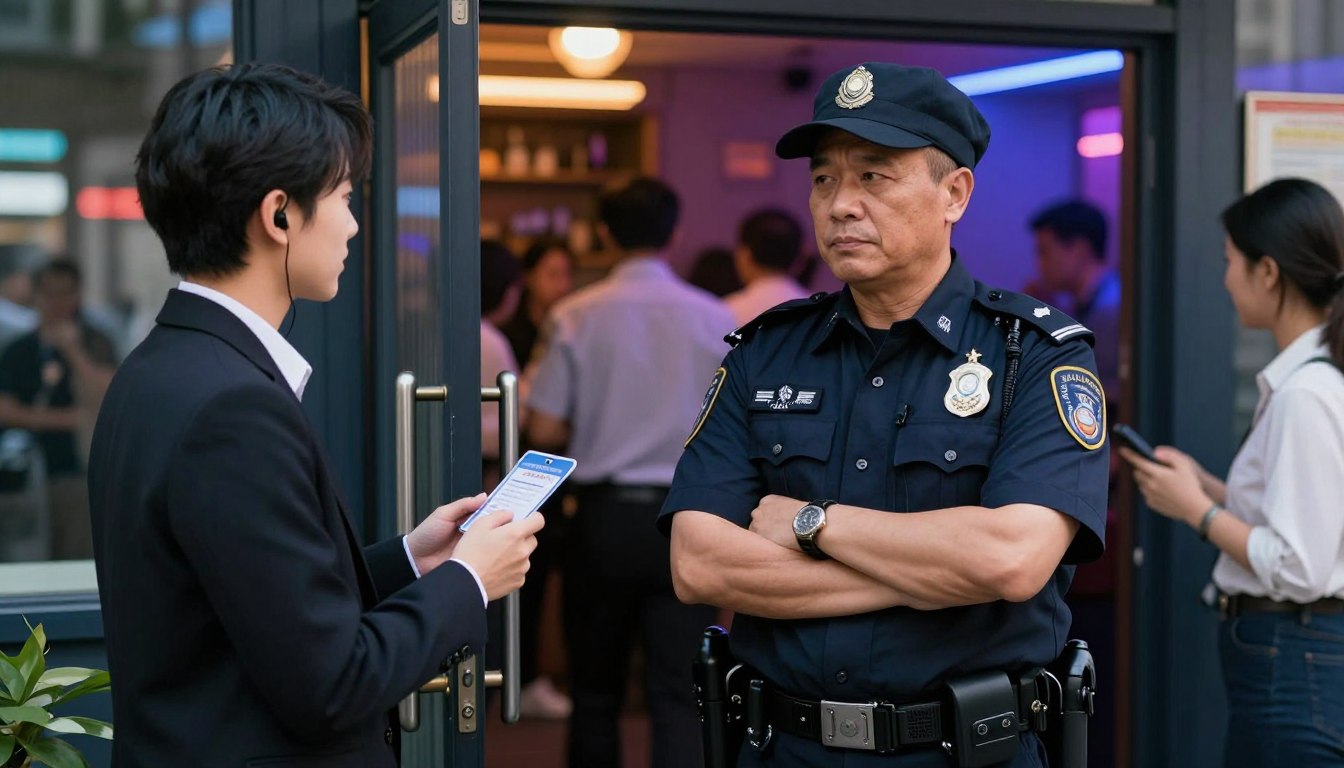
Walk into a shopping centre, a hospital or a nightclub and you’ll see someone in a high-visibility jacket or black jacket with a badge. To the public, they’re all just “security.” Inside the industry, though, a security guard and a door supervisor are different jobs with different licences, different working conditions and different career routes.
If you’re thinking about a career in UK security, choosing the wrong one can cost you time and money. This guide explains the real differences in plain terms so you can pick the right path before you book any training.
Many newcomers in the United Kingdom are worried on which type of security to go into. Many are confused on the difference between a door supervisor and a security guard or even, a CCTV security officer. Some also want to know if they could use a door supervisor badge to work n buildings and construction sites. Again, most are confused on whether they could use a security guard license to work in retail and pubs. These and many more would be answered in this article.
What does a security guard actually do?
A security guard usually works at sites that don’t serve alcohol. Think retail units, office blocks, warehouses, construction sites, hospitals and car parks. Security guards aren’t licensed to work at premises where alcohol is consumed, such as bars and clubs.
Day to day, the job tends to be quieter than people expect. You might control who enters a building, patrol a site, monitor CCTV, check deliveries or respond to alarms. Much of the work is about being visible, observant and reliable. When something does go wrong, the guard’s value comes from noticing it early and reporting it clearly.
Guards also do a lot of unglamorous work: logging visitors, writing shift notes and handing over properly to the next person. A site is only as secure as its records are accurate.
James Nick, a security guard in Manchester says the role requires patience and skills. According to him, the entire shift may be boring if there are no incidents to keep an officer busy.
Nick says: ” I work 12 hours shift for 5 days. It typically starts from 7am to 7pm. I get to work and receive a proper handover from the officer on duty. Most of the 12 hours is spent sitting at the front desk doing reception duties such as logging in visitors, directing them, patrolling, responding to alarms, and other duties assigned by the facility manager.”
“Sometimes, it could tun out to be a boring day, especially on weekends when their are no staff or visitors on site. In such days, I occupy myself by reading books or watching movies on my laptop. The hours run faster when you keep yourself busy. But most importantly, incident reports must be filled in during shift, and a proper handover to the next officer is a must-do for security guards.”
Nick says that some sites require security guards to conduct search on staff and visitors, vehicle search, searching rooms or buildings,. He added that the job of a security guard is quieter and less stressful than that of a door supervisor.
What does a door supervisor actually do?
A door supervisor works at licensed premises, mainly pubs, bars, clubs and event venues. Their role is to take responsibility for the safety of visitors and customers inside the premises. In practice that means checking entry, keeping an eye on capacity, spotting trouble early and removing people who have crossed the line.
The environment is the main difference. Alcohol changes how people behave, so a door supervisor spends far more time reading body language, defusing arguments and making quick judgement calls. Evenings, nights and weekends are the norm, and the job is often busy in bursts, with a lot of waiting followed by moments that need your full attention.
Door work is also public-facing in a way guarding often isn’t. You’re the first face people see when they arrive, so your manner matters as much as your authority.
It is the most stressful job I have worked, says Keith Langton, a door supervisor in a pub in Edinburgh. “The job involves managing large crowd of people who have come to have fun in a club or pub. Sometimes, you have to manage a long queue due to body search and checking of ID cards to ensure those you allow in to the pub are over the age of 18.
“The entire shift could be interesting and fun if you love music. It means you could work and still have fun while on duty. The only problem is when you have customers trying to stir up a fight, and you have to de-escalate the situation all alone. I have had incidents where I had to kick customers out for disturbing the peace of the pub. It is risky, some of the angry customers would waylay you after the pub closes, just to teach you a lesson.”
“So, for me, I think the job is fun when you know how to handle issues in a calm manner, smile at customers, help with road directions, have a chat with those who care to engage you, and you will be fine for that shift. A shift is good today doesn’t guarantee a next good shift. No two days are the same.” Langton added that he stands for 10 hours or more which eventually hurts his legs and ankles.
The licence is the real dividing line
Both jobs require an SIA licence, and working in the private security industry without one is illegal. But the licences are not equal.
A Door Supervisor licence lets you work as both a door supervisor and a security guard, whereas a Security Guard licence only covers manned guarding roles. Put simply, the door supervisor licence is wider. A training provider that sells both courses also points out that if you take the Security Guard course, you can’t then apply for a Door Supervisor badge.
That’s why many newcomers go straight for the Door Supervisor licence even if they expect to work as guards. It keeps more options open. The trade-off is that the training is usually longer and more demanding, which affects cost and time. Licence fees and course lengths change, so check the current figures with the Security Industry Authority (SIA) and your chosen training provider before committing.
Licensed work also involves checks beyond the course itself, such as identity and criminal record checks and a valid first aid qualification. Make sure you know the full list before you pay for anything.
An immigrant who moved to the UK in 2019 says he joined the industry as a door supervisor, and later switched his licence to security guard. Mohammed Assad, 39, from Iran, says he had to undergo a one week course, and then an exam, before getting a door supervisor licence.
“Before the exam, I was trained for first aid, then given a certificate. Then the full door supervisor course was for 5 days, and exam was on the 6th day. It took about a week or thereabouts to get the result. After then, I applied to the SIA for a licence. It takes about 2 weeks for the licence to be issued as several checks had to done.
“With a door supervisor licence, I worked in pubs, clubs, retail stores and construction sites. After some years when the licence expired, I did a CCTV course and switched my licence to that of a security guard. I think I prefer this because it is quiet and peaceful.
The skills each role leans on
The two jobs share a core. Both need good communication, calm behaviour under pressure, honest report writing and a sound understanding of the limits of your authority. Neither is about being tough for its own sake. Good officers resolve most situations with words.
Where they differ is emphasis. A guard needs patience, consistency and attention to detail, because long quiet periods can lull you into missing something. A door supervisor needs sharper conflict skills and quicker judgement, because problems escalate faster when alcohol is involved.
Knowing the law matters in both roles. You should understand your powers, what counts as reasonable force, and when to call the police instead of intervening. Getting this wrong can end your career, so treat training as the beginning of your learning, not the end of it.
For both roles, you need to know what the law says in every given situation, says Charles Frederick, a security manager in London. “Both roles are quiet sensitive but differ in few areas. A door supervisor tends to be in more danger than a security guard. So, a door supervisor needs to know when to take flight when situation gets out of hand. No job is worth your life. In a busy and noisy club, a door supervisor must be able to read the room, read people’s mind, watch people’s gestures, know when to ring police, and ability to solve issues calmly.”
“Security guards manning a budling are rarely at risk, depending on the site though. They usually have peaceful shift in most cases. But that is not to say they do not need any skills on the job. A security guard must have literacy skills, computer skills to use the camera, sometimes, Microsoft office skills to log in reports and records, effective communication skills to engage staff and visitors. On the overall, both roles are good depending on your preference.”
Hours, pay and working life
Guard work often includes day shifts, though many sites need 24-hour cover, so nights and weekends are common too. Door supervisor work is concentrated in evenings and late nights. If you have caring responsibilities or prefer regular hours, that matters.
Pay depends on the region, the employer, the contract and the type of site, so published pay ranges should be treated as rough guides. Door supervisors often earn more per hour than guards, partly because of the unsocial hours and higher-risk environment. Check current job adverts in your area to see what employers are really offering.
Think honestly about what suits you. Some people thrive on the pace of a busy venue. Others do their best work on a quiet site where they have time to observe and think.
Where each role can lead
Both roles can lead to supervisor, team leader and management positions, and some people move into areas such as CCTV operation, event security, risk consulting or training others. Because the door supervisor licence covers guard duties, it can give you more routes into promotion, though experience and reliability count as much as the badge.
Many officers add a second licence over time, such as CCTV, to widen their options. Others use the industry as a stepping stone into related fields like investigations, compliance or journalism about the sector.
To be fair, there is little or no growth in the security industry, says John Smith, a door supervisor with 8 years working experience in Cardiff. According to smith, some of his colleagues have spent more than 10 years as door supervisors and there is no hope in sight for any growth, despite their academic qualification.
“If at all, you can grow to become a line manager, and that is it. Most of the guys at the top did not start from door supervisor. The problem starts when you enter the industry from the bottom, it is difficult to go up.”
Proffering a solution, Smith says the alternative way out is to establish his own security outfit, but it would require both financial and human capital. He said: “I am not well paid enough to be able to establish my own outfit, unless I consider taking a loan.”
How to decide which is right for you
A few practical questions can settle it:
- Are you comfortable with confrontation and late nights? If not, guarding may suit you better.
- Do you want maximum flexibility? The door supervisor licence covers more ground.
- What kind of work is available near you? A city with a busy night-time economy has different demand from a town dominated by offices and retail.
- What’s your budget and timeline? Compare training costs and course lengths from several providers.
There’s no wrong choice, only the choice that fits your circumstances.
The choice depends on the individual preference and lifestyle, says Assad. “If you like it quiet and peaceful, just normal office setting, go for security guard. If you like to enjoy loud music while you work, go for door supervisor.
“In some companies, both roles earn the same wages, or little above the other. I have done both roles and I will choose the security guard over and over again.”
Getting started: a short checklist
- Check the current SIA licensing requirements on the official website.
- Compare accredited training providers, including price, location and reviews.
- Make sure you meet the eligibility rules, including right to work and identification.
- Complete the training and pass the assessments.
- Apply for your licence and wait for approval before you work.
- Apply for jobs that match your licence type.
Security guards and door supervisors both keep people safe, but they do it in different settings and with different licences. Guards typically protect property and sites where alcohol isn’t served, while door supervisors manage safety at licensed venues. The wider door supervisor licence gives you more choice, but it comes with more demanding work.
Whichever you choose, a good officer is observant, calm, honest and professional. Those qualities matter far more than a badge. Do your research, check the official rules and choose the route that fits the life you want.
Disclaimer: This article is general information, not legal or licensing advice. Always check current requirements with the Security Industry Authority.